Curriculum & Readiness
Coding now features in NERDC curriculum - Parents check before paying fees.
FUTURE SKILLS • PRIMARY 4 - SS3
ARFET STEM training - Coding, robotics, drones, 3D, AI for pupils 9-18. After-school club in your school, holiday bootcamp.

FUTURE SKILLS STARTS NOW
We teach coding, robotics, AI, 3D, drones - Not theory - Practical - Build robots, games, fly drones. In your school.
Coding now features in NERDC curriculum - Parents check before paying fees.
Schools are adding robotics clubs and practical technology programmes for learners.
SS3 learners can build STEM projects for science fairs and portfolios for future applications.
A visible STEM programme can support school differentiation while pupils explore technology careers.
Scratch, block robotics, science experiments and games.
Python basics, Arduino robotics, sensors, drones, 3D Tinkercad and mobile apps.
Advanced Python, AI basics, websites, IoT smart home and capstone projects for portfolios and scholarships.
No coding needed before. Pupils start from scratch.
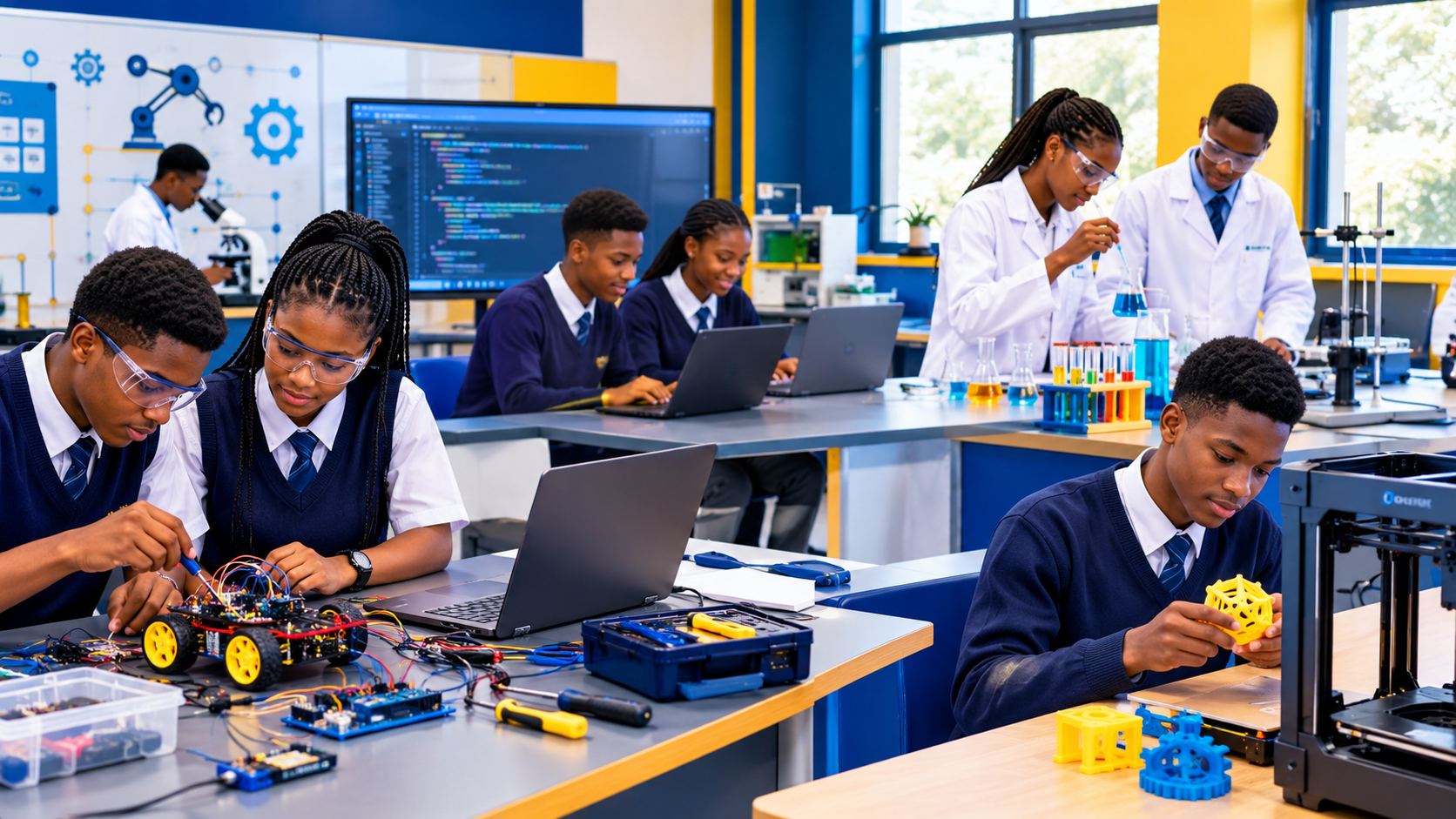
We come to your school and deliver the programme through practical, hands-on sessions.
Deliverable: 3 projects/term + certificate + end-term exhibition for parents.
Primary & JSS-SS separate batches, 15 max, 3 months/level, from ₦25k/month - Kits usage included. Take-home kit optional from ₦35k.
1-2 weeks intensive Monday-Friday, 10am-2pm.
Train for FIRST LEGO, science fairs, Cowbellpedia, Interswitch and project portfolios for UK/Canada admission - 4-8 weeks, project-based.
Scratch football game, traffic light LED, robot car, volcano, solar car.
Python calculator, obstacle robot, line follower, drone flight, 3D printed stand, quiz app.
Portfolio website, AI face attendance, smart home, smart dustbin, e-commerce site, capstone solving a community problem.
All projects can be documented on video for parents and school social media, helping showcase practical technology learning.
Scratch MIT, Arduino UNO, sensors, motors, Raspberry Pi for SS3, educational drones, 3D printer demo, Python, Tinkercad and MIT App Inventor.
Take-home Arduino kit optional - From ₦35k.
1 session/week, 2hrs for 1 age group, 1 trainer + kits, up to 20 pupils, 3 projects/term + certificate.
2 sessions/week for 2 groups - Primary + JSS, 1-2 trainers + kits + laptops, up to 40 pupils, 4 projects + certificate + exhibition, flyer for marketing, you charge STEM fee - Profit.
3 sessions/week - Primary, JSS, SS full programme, 2 trainers + full lab setup, unlimited in batches, 3D printer demo + drone monthly, competition training, help setup permanent STEM lab, branded “ARFET STEM Certified School.”
Kits + furniture - Arduino, laptops, 3D printer, tools - You own the lab.
4 Saturdays, 12hrs/month - Certificate/level.
From ₦30k/1wk, ₦50k/2wks - 5 projects - Certificate.
8 sessions - At home or online.
Build, not PowerPoint.
No transport burden for school-based programmes.
Patient trainers and age-appropriate learning.
Every child can have project documentation and a certificate.
Schools can charge a STEM fee and build a visible technology programme.
Plus IT, staffing, uniform and other school services.
Primary 4, around age 9. Pupils should be able to read and type a little. Scratch uses drag-and-drop blocks. Smart Primary 3 pupils can be assessed.
No. Scratch blocks are designed to make programming approachable, and pupils learn by building simple games and projects.
Yes. Train-the-teacher for 2 weeks covering Scratch and Arduino - From ₦80k one-time - followed by optional termly supervision.
Yes. Starter kits from ₦35k; classroom kits for 20 pupils from ₦400k one-time. Or rent kits through the club programme.
Yes. For example, a school can structure a STEM fee for participating pupils while ARFET provides the training and programme support.
Yes - ARFET STEM Certificate + project video. The programme can be fun and foundational for primary pupils and portfolio-focused for SS3.
Make your school a tech school parents pay a premium for.
Start A STEM Programme